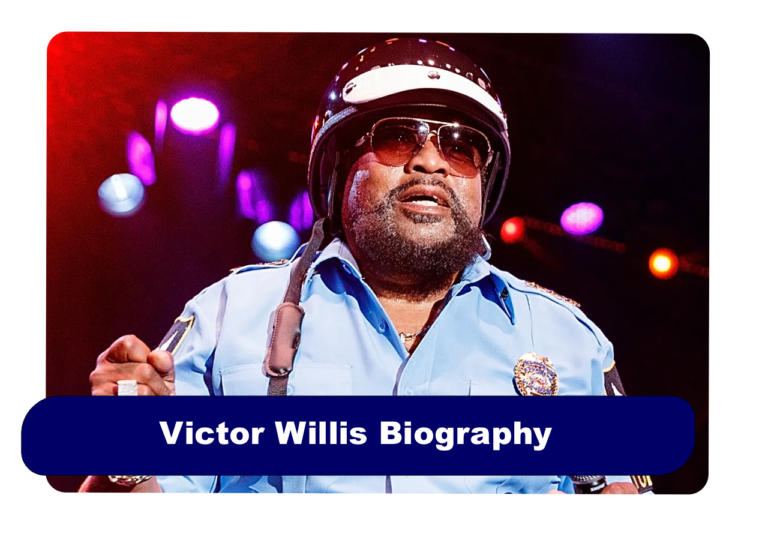
Victor Willis was the founding lead singer of Village People and co-writer of YMCA. Discover his life, career, landmark copyright battle, and enduring musical legacy.
Victor Willis was the powerful baritone voice behind some of the most recognizable songs in popular music history. As the founding lead singer and principal lyricist of Village People, he co-wrote “Y.M.C.A.,” “Macho Man,” “In the Navy,” and “Go West” — songs that transcended the disco era and became permanent fixtures of global culture. More than four decades after he first stepped into that now-iconic police officer costume, his music was still filling arenas, wedding dancefloors, and presidential campaign rallies around the world.
Willis was not just a performer — he was a songwriter who spent decades fighting, and ultimately winning, a landmark legal battle to reclaim proper ownership of the songs he created. That victory reshaped music copyright law in the United States and set a precedent that benefited artists well beyond the world of disco. He passed away on June 30, 2026, one day before his 75th birthday, following a short but aggressive illness.
Quick Facts About Victor Willis
| Detail | Information |
|---|---|
| Full name | Victor Edward Willis |
| Date of birth | July 1, 1951 |
| Place of birth | Dallas, Texas, USA |
| Date of death | June 30, 2026 |
| Age at passing | 74 years old |
| Profession | Singer, songwriter, actor |
| Known for | Village People, “Y.M.C.A.,” “Macho Man,” “In the Navy” |
| Net worth (est.) | $30 million (conservative); up to $75 million per his estate |
| Spouse | Karen Huff-Willis (m. 2007) |
| Previous marriage | Phylicia Ayers-Allen (m. 1978–1982) |
| Famous role | The police officer/naval officer of Village People |
Early Life: From the Pulpit to the Stage
Victor Willis was born on July 1, 1951, in Dallas, Texas. His father was a Baptist preacher, and the church was where Willis first discovered his voice — singing in the congregation from a young age. The spiritual and emotional depth he absorbed in those early years would later give his performance style a conviction that set him apart from other singers of his era.
As he got older, Willis pursued formal training in both acting and dance. In his mid-twenties, he relocated to New York City, where he joined the prestigious Negro Ensemble Company — a celebrated theatre institution that had launched the careers of numerous major Black American artists. That foundation in serious stagecraft shaped his approach to performance for the rest of his life.
Broadway, The Wiz, and a Fateful Meeting
Willis’s New York years were productive. He appeared in multiple musicals and plays before landing a role in the original Broadway production of The Wiz in 1976, later reprising the production in Australia. It was a meaningful credential — The Wiz was a landmark of Black American theatre — and it brought him into contact with people who would change everything.
Among those people was French disco producer Jacques Morali, who encountered Willis and was immediately captivated by what he called his “big voice.” Morali approached Willis with an audacious offer: to front an album he was developing, which Morali believed would be a massive hit. “I had a dream that you sang lead vocals on my album and it went very, very big,” Morali reportedly told him. Willis agreed, and that handshake launched one of the most unlikely success stories in pop music history.
It was also during the run of The Wiz that Willis met actress Phylicia Ayers-Allen. The two married in 1978; she later became famous worldwide as Clair Huxtable on The Cosby Show. Willis wrote the lyrics and arranged the vocals for her disco concept album, Josephine Superstar, which featured Village People on backing vocals. The marriage ended in 1982.
The Birth of Village People and the Disco Era
The debut Village People album was released in July 1977, with Willis singing lead and background vocals on the entire record — the group, at that point, did not yet exist as a live performing unit. When the album became a substantial hit, producer Morali and Willis placed an ad in music trade papers calling for “macho” singers who “could also dance” and “must have a mustache.” The live lineup was assembled around Willis, with each member embodying a distinct costumed character.
Willis performed as the police officer — and occasionally the naval officer — and was the primary lyrical architect of the group’s sound. What followed was one of the most remarkable commercial runs in late-1970s music. The Village People scored major international hits with “Macho Man” (1978), “Y.M.C.A.” (1978), “In the Navy” (1979), and “Go West” (1979). “Y.M.C.A.” peaked at number two on the Billboard Hot 100 and topped charts worldwide. Remarkably, Willis wrote the lyrics in just six hours, completing the final draft in ten minutes. The song’s now-universal arm-spelling dance made it one of the most participatory anthems in music history.
By the late 1970s, the Village People had sold over 100 million records worldwide. They were a phenomenon — absurdist in costume but deeply serious in their musicianship, and far more durable than the critics who dismissed them as a novelty act could have predicted.
Departure, Personal Struggles, and Solo Years
Willis left Village People in 1980 as preparations began for the group’s feature film, Can’t Stop the Music. Although he does not appear in the movie, he wrote the lyrics for two of its songs. After his departure, the group never charted another major hit — a fact that underscores how central Willis was to their sound.
He briefly rejoined in 1982 for the album Fox on the Box, released in the United States as In the Street, but left again in 1983. The years that followed were difficult. Willis struggled with substance abuse and had several run-ins with the law. During this period, he consistently declined offers to record or perform his Village People material — a stance of artistic self-respect that cost him financially but preserved his integrity. He recorded a solo album, Solo Man, in 1979, but it remained unreleased for over thirty years, finally seeing the light of day in 2010. In 2007, he entered the Betty Ford Clinic and began the process of rebuilding his life.
On November 17, 2007, Willis married Karen Huff, a lawyer and entertainment executive. The marriage proved to be a stabilizing and joyful chapter, and Karen Huff-Willis remained a central figure in his life and career until his death.
The Copyright Battle That Changed Music Law
Perhaps the most consequential chapter of Willis’s later career had nothing to do with a microphone. In 2011, forty-two years after signing away his rights as a young songwriter with limited bargaining power, Willis invoked the “termination rights” provision of the Copyright Act of 1976 — a law that allows songwriters to reclaim their work after thirty-five years, regardless of what they originally signed.
The publishers, Can’t Stop Productions and Scorpio Music, fought back hard, arguing that Willis was a “work for hire” employee and could not unilaterally reclaim his share. In May 2012, U.S. District Judge Alison J. Nathan ruled in Willis’s favor, establishing that a joint author could independently terminate a copyright grant — a decision with sweeping implications for the entire music industry. Artists from Bob Dylan to Tom Petty had filed similar notices; Willis’s case became the first major legal test of the provision.
In 2015, a jury further determined that the sole writers of 13 Village People songs were Morali and Willis, removing Henri Belolo’s name from the credits and giving Willis a 50% ownership stake in those compositions. Where he had previously earned $30,000 to $40,000 per year in total royalties, he now earned over $1 million annually from “Y.M.C.A.” alone. His 50% ownership of the Village People music catalog — valued conservatively at $20–30 million and potentially far higher — transformed his financial position entirely.
Return to Village People and Final Chapter
In 2017, Willis reached an out-of-court settlement with Henri Belolo’s estate and returned to Village People as lead singer — this time as exclusive licensee of the group, a contractual position that gave him meaningful control over the brand. The reunion ushered in a new period of recording and international touring. In 2018, the group released A Village People Christmas.
In his final years, Willis also found himself at the center of an unlikely political moment. Donald Trump adopted “Y.M.C.A.” as a signature song at his campaign rallies beginning in 2020, and the song’s renewed visibility drove a significant spike in streams and royalties. Willis publicly thanked Trump for the exposure while also making clear — at times forcefully — that he did not consider the song a “gay anthem,” a characterization he rejected in interviews and through legal threats. His position on the song’s meaning was consistent: he wrote it about the real YMCA he knew in San Francisco — swimming pools, basketball courts, cheap rooms, and community.
Willis died on June 30, 2026, one day before his 75th birthday. President Trump paid tribute on Truth Social, calling him “a great and happy guy.” The Village People announced his passing with a brief, private statement: “Victor passed on Monday June 30, 2026 of a short but aggressive illness. Privacy is requested.”
Net Worth and Financial Legacy
At the time of his death, Victor Willis’s net worth was estimated at approximately $30 million by conservative assessments, with his estate claiming a figure closer to $75 million based on the valuation of his 50% share of the Village People music catalog. His income in his final decade came primarily from royalties — “Y.M.C.A.” alone generated over $1 million annually — as well as touring income and licensing deals covering everything from Broadway musicals and television commercials to slot machines and sporting events. The “Y.M.C.A.” arm dance remains one of the most performed participatory gestures in global entertainment, ensuring that his catalog will continue generating income for decades to come.
Wrapping Up
Victor Willis’s life moved through chapters that few artists experience — from a preacher’s son singing gospel in Dallas to Broadway stages, disco superstardom, years of personal struggle, a landmark courtroom victory, and a final act of creative renaissance. Each chapter taught him something, and he carried it all with him.
What the copyright battle made plain, and what the music had always suggested, is that Willis was never simply a front man in a costume. He was a craftsman who wrote songs that outlasted the era they were born in. “Y.M.C.A.” is now nearly fifty years old and shows no signs of fading. That is not a novelty act. That is songwriting that works.
He leaves behind a musical legacy that is genuinely indestructible, and a legal legacy that changed the landscape for artists who come after him.
People Also Ask
What was Victor Willis best known for?
Victor Willis was best known as the founding lead singer of Village People and the co-writer of “Y.M.C.A.,” “Macho Man,” “In the Navy,” and “Go West.” He performed in the group’s iconic police officer costume and was the primary voice and lyrical architect of their biggest hits.
How did Victor Willis win back the rights to “Y.M.C.A.”?
Willis invoked the “termination rights” provision of the Copyright Act of 1976, which allows songwriters to reclaim their work after 35 years. After a legal battle beginning in 2007, he won a landmark ruling in 2012 and was confirmed as a 50% owner of 13 Village People songs in 2015. The case set a major precedent for music copyright law in the United States.
Was Victor Willis married to Phylicia Rashad?
Yes. Willis was married to actress Phylicia Ayers-Allen — later known as Phylicia Rashad — from 1978 to 1982. They met during the original Broadway production of The Wiz. He later married lawyer and entertainment executive Karen Huff in 2007; they remained together until his death in 2026.
How much did Victor Willis earn from “Y.M.C.A.” royalties?
After winning his copyright case, Willis went from earning $30,000–$40,000 per year in total royalties to earning over $1 million annually from “Y.M.C.A.” alone. His 50% ownership of the Village People catalog was separately valued at $20–30 million or more.
When did Victor Willis die?
Victor Willis died on June 30, 2026, one day before his 75th birthday, following what was described as a short but aggressive illness. Village People announced his passing in a brief statement requesting privacy for his family.