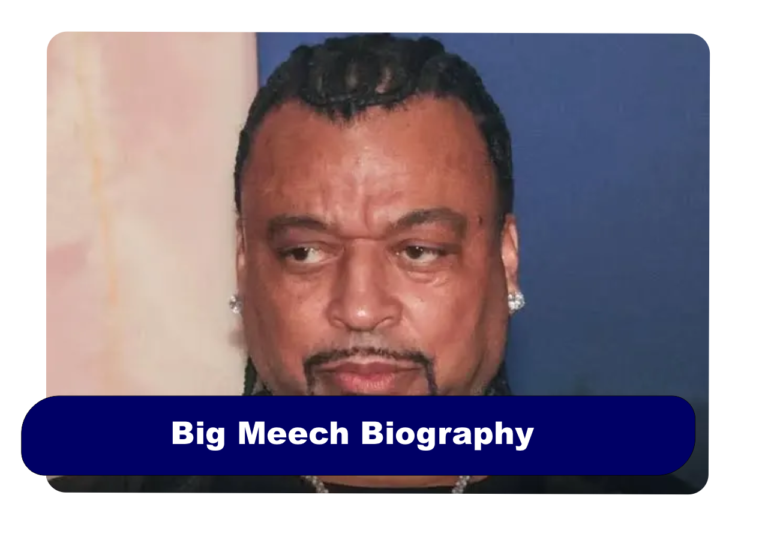
Big Meech (born June 21, 1968) is the co-founder of the Black Mafia Family. Explore his rise, fall, prison sentence, 2026 release, and the hit Starz series based on his life.
Demetrius “Big Meech” Flenory is one of the most mythologized figures in American street culture and hip-hop history. As co-founder of the Black Mafia Family — a drug trafficking organization that moved an estimated $250 million worth of cocaine across the United States between the late 1980s and 2005 — he became a legend long before a television series made his name known to mainstream audiences.
His story is one of extraordinary ambition built on a foundation of crime: a working-class Detroit childhood, a teenage entry into the drug trade, a rise to near-untouchable status in Atlanta’s club scene, a DEA investigation that dismantled everything, and nearly two decades of federal prison. Today, following his October 2024 transfer to a residential reentry program in Miami, Big Meech is completing the final stretch of a sentence that officially ended on January 27, 2026. He came home to a world in which 50 Cent had turned his life into one of the most-watched shows on Starz.
Quick Facts About Big Meech
| Detail | Information |
|---|---|
| Full Name | Demetrius Edward Flenory |
| Known As | Big Meech |
| Date of Birth | June 21, 1968 |
| Age | 57 (as of 2026) |
| Birthplace | Detroit, Michigan, USA |
| Nationality | American |
| Organization | Black Mafia Family (BMF), co-founder |
| Brother | Terry “Southwest T” Flenory |
| Conviction | Drug trafficking, money laundering (2008) |
| Original Sentence | 30 years federal prison |
| Sentence End Date | January 27, 2026 |
| Net Worth | ~$500,000 (est. 2026; from $100M+ at peak) |
| Children | Demetrius “Lil Meech” Flenory Jr.; Manessa Mia Hussey |
| TV Series | BMF (Starz, 2021–present), produced by 50 Cent |
Early Life: Detroit, Poverty, and the Streets
Demetrius Flenory was born on June 21, 1968, in Detroit, Michigan — a city already in steep economic decline as the manufacturing base that had built it began to erode. He grew up with his brother Terry Flenory, born a year and a half later, in southwest Detroit. Despite the mythology that would later surround them, the Flenory brothers came from a two-parent household rooted in Christianity, with parents who were deeply aware of the dangers the streets posed to their sons.
Detroit in the late 1970s and 1980s offered very little to young men without money or connections. The crack cocaine epidemic was tearing through urban communities across America, and the drug trade was one of the few economies that seemed accessible. By the time Demetrius was in high school, he and Terry had already begun dealing — initially selling $50 bags of cocaine in their neighborhood. It was, in his own words recorded during a federal prison phone interview, simply about survival: “It was just about being able to eat.”
Their earliest work was done under the umbrella of a local crew called the 50 Boyz, run by a figure known as E.D. Boyd. Boyd later confirmed that he gave the Flenory brothers his blessing to expand their own operation — the beginning of something that would grow far beyond anything anyone in those early circles imagined.
Building BMF: From Detroit to Atlanta
The Black Mafia Family was formally organized in southwest Detroit in 1989. What began as a street-level cocaine operation grew steadily through the 1990s into something with national reach. The brothers had complementary roles: Demetrius — Big Meech — handled distribution and ran the Atlanta operation with a flair for spectacle and connection-building. Terry — Southwest T — managed logistics and supply lines, including relationships with Mexican drug cartels who served as the organization’s primary cocaine source in Los Angeles.
Atlanta was where Big Meech truly became a legend. He became a fixture in the city’s club scene at a time when Atlanta was emerging as the capital of Southern hip-hop culture. BMF threw parties, funded nightlife, sponsored events, and cultivated relationships with artists and celebrities. The organization’s logo — bold, custom-designed, instantly recognizable — appeared on jewelry, clothing, and tattoos worn by thousands of people who had no direct involvement with the drug trade but wanted proximity to the mythology of it.
By the early 2000s, BMF had reportedly grown to hundreds of members operating in cities across the country, with an estimated annual revenue in the tens of millions. The organization had also established BMF Entertainment, a record label ostensibly designed to break artists but widely understood by federal investigators to serve money laundering purposes. Rapper Bleu DaVinci was the label’s most prominent signing, and BMF’s connections to artists including Young Jeezy became a defining feature of Atlanta hip-hop culture in that era.
The DEA Investigation and the Fall
Federal authorities had been watching BMF for years. The Drug Enforcement Administration built its case methodically, using surveillance, informants, and wiretaps over the course of a sustained investigation. In 2005, the scope of what they had assembled became clear: federal agents moved against the organization, arresting dozens of members across multiple cities.
Big Meech and Southwest T were arrested and charged with running a continuing criminal enterprise — the most serious category of federal drug charges, reserved for large-scale, hierarchical drug organizations. In 2007, both brothers pleaded guilty. In 2008, they were each sentenced to 30 years in federal prison. The sentence was designed to be punishing. For a man who had spent the previous decade as arguably the most visible drug kingpin in America, it was a complete and total collapse.
At his peak, Big Meech had a personal net worth estimated at over $100 million. The federal government seized what they could. By the time he walked out of prison in 2024, his estimated net worth had fallen to approximately $500,000.
Prison, Rehabilitation, and the Long Road to Release
Big Meech served the majority of his sentence at the Federal Correctional Institution in Coleman, Florida. By his own filings and those of his attorney, Brittany K. Barnett, his time inside was not static. He earned his GED. He enrolled in additional prison education programs. His lawyers reported that he had not received a single disciplinary infraction since 2021. He presented himself to the courts as a fundamentally different man from the one who had built BMF — and his sentence was ultimately reduced from the original 30 years to a release date of January 27, 2026.
In October 2024, he was transferred from federal prison to a residential reentry center in Miami — a halfway house arrangement that allowed him to begin transitioning back into society under supervision. The reaction to that transfer was immediate and loud. LeBron James posted “Welcome home Big Meech” on social media. Celebrities who had long orbited BMF mythology celebrated publicly. His son, Demetrius “Lil Meech” Flenory Jr., and his daughter, Manessa Mia Hussey, posted extensively about their father’s return.
He has spoken about plans to launch an initiative called Build More Families, aimed at helping people reconnect with community and family — a direct inversion of the enterprise that defined his earlier life.
The BMF Series and Pop Culture Legacy
Whatever one thinks of his actual history, the cultural footprint of Big Meech and BMF is undeniable. Hip-hop has been referencing BMF for two decades — the name appearing in songs by everyone from Rick Ross to Young Jeezy to Drake. The organization’s aesthetic of conspicuous wealth, custom luxury, and street-coded brand identity became a template for an entire generation of rap imagery.
In 2021, 50 Cent launched BMF on Starz — a scripted drama series inspired by the Flenory brothers’ story. The casting choice that made headlines was the selection of Big Meech’s own son, Demetrius “Lil Meech” Flenory Jr., to play his father. The show premiered to strong ratings, was renewed for a second season within four days of its debut, and has since run through four seasons as of 2025. 50 Cent executive produces the series through his G-Unit Films banner, with Lionsgate Television.
Big Meech has been involved in the periphery of the show’s success, communicating with 50 Cent during his incarceration and expected to take a more active role following his release. His appearance at the halfway house drew visits from 50 Cent and other celebrities, though a subsequent meeting with Rick Ross — 50 Cent’s longtime rival — created public friction between Meech and the show’s executive producer, briefly playing out on social media.
Family: Lil Meech and the Next Generation
Big Meech’s son, Demetrius Flenory Jr. — known professionally as Lil Meech — has emerged as a public figure in his own right through the BMF series. Playing his father on screen required two years of intensive acting coaching organized by 50 Cent before production even began. Lil Meech has spoken about the experience of portraying his father with visible emotion, noting the weight of representing a man he spent years separated from due to incarceration.
The relationship between Big Meech and his children has been shaped almost entirely by prison visits and phone calls. Their reunions in 2024 drew significant attention and were widely shared on social media — images of a family attempting to reassemble across a gap of sixteen-plus years.
Net Worth: From Empire to Reentry
The financial arc of Big Meech’s life is stark. At the height of BMF’s operations, he was estimated to have a personal net worth exceeding $100 million — funds expressed in the form of luxury cars, custom jewelry, real estate, and the kind of lavish nightlife spending that made him a celebrity in Atlanta’s entertainment ecosystem. Federal seizures, legal costs, and nearly two decades without income reduced that figure dramatically. His current estimated net worth, as of his 2026 release, sits around $500,000.
The path to rebuilding, if he pursues it legitimately, runs through the entertainment industry. The BMF series, potential executive producing roles, public appearances, and any number of media projects tied to his story represent a commercial opportunity that did not exist for most formerly incarcerated individuals. Whether he takes that path remains to be seen.
Wrapping Up
Big Meech’s story doesn’t resolve neatly — and that’s precisely why it keeps being told. He built something that by any measure represents decades of harm to communities, families, and individuals caught in the drug trade’s wake. He also built a mythology so powerful that it outlasted his freedom by fifteen years, generated a hit television series, and made his son an actor.
At 57, he is starting over under federal supervision, with a name that carries more cultural weight than most people acquire in a lifetime. What he does with that weight — in the framework of the initiative he has described, in whatever relationship he builds with the entertainment industry, in the private life he has not had since 2005 — is the part of the story that hasn’t been written yet.
People Also Ask
Who is Big Meech?
Big Meech is the street name of Demetrius Edward Flenory, born June 21, 1968, in Detroit. He co-founded the Black Mafia Family alongside his brother Terry “Southwest T” Flenory — a drug trafficking organization that operated across the United States from the late 1980s until its dismantling by the DEA in 2005.
Is Big Meech out of prison?
Yes. Big Meech was transferred from federal prison to a residential reentry center in Miami in October 2024, completing the supervised portion of his sentence ahead of his official release date of January 27, 2026. He is now a free man.
What was Big Meech sentenced for?
In 2008, Big Meech was sentenced to 30 years in federal prison after pleading guilty in 2007 to running a continuing criminal enterprise — the federal charge applied to leaders of large-scale drug trafficking organizations. His sentence was later reduced, bringing his release date to January 2026.
What is the BMF TV show?
BMF is a scripted drama series on Starz, executive produced by 50 Cent, that is loosely based on the rise and fall of the Black Mafia Family. It premiered in September 2021 and has run through four seasons as of 2025. Big Meech’s son, Demetrius “Lil Meech” Flenory Jr., plays his father in the series.
What is Big Meech’s net worth in 2026?
His estimated net worth as of 2026 is approximately $500,000 — a dramatic fall from the $100 million-plus attributed to him at BMF’s peak. Federal asset seizures and nearly two decades of incarceration account for the difference. Potential entertainment income from the BMF series and related projects may increase that figure going forward.